Affordable prices
Many years of experience
Free parking available

Biomechanics
Biomechanics is an understanding of the mechanics of the human body, especially the forces of the muscles and gravity on the skeletal structure.
Normal biomechanics of the foot and ankle can be divided into static and dynamic components. The static structures include the bones, joint surface congruity, ligaments, and fascia. The dynamic components include the arthrokinematics of the tarsal bones and muscle function.
Poor foot biomechanics can also alter the alignment of your knees, hips, pelvis and spine causing pain and discomfort. Foot pain can arise from poor biomechanics. Our specialist Podiatry services provide a comprehensive assessment ensuring the cause of your foot pain is established and the correct treatment can commence.

What Causes Biomechanical Foot Pain?
There are many factors to biomechanical foot pain. The smallest abnormality can make the foot function inefficiently. Some abnormalities may include:
- Abnormal foot alignment
- Unusual foot shape
- Obesity
- Poor footwear choices
- Trauma
For the foot to function correctly in gait it is imperative for it to be in an efficient neutral position. The position and the structure of the foot will ultimately determine how it will function when walking.
What problems caused by Biomechanical foot pain can Podiatrists help with?
Podiatry treatment can help with a number of symptoms arising from poor foot biomechanics including:
- Pain
- Swelling
- Muscle imbalance
- Instability
- Decreased function
Our specialist Podiatrists will identify the cause of your foot pain in order to implement the correct treatment. Please book an appointment using the online booking form.

Our specialist Podiatrists apply their knowledge of biomechanics to every patient. It enables them to understand the reasons why someone may be experiencing pain or dysfunction and how it can be addressed.
How is biomechanical foot pain diagnosed?
Biomechanical foot pain is diagnosed following a podiatrist carrying out a comprehensive subjective and objective assessment. This is so the cause of your foot pain can be identified and the correct treatment can be implemented ensuring you get the most out of your session. Click here to see our pricing structure or give us a call for more information.
Treatment of: Soft Tissue Inflammation

plantar fasciitis
…is one of the most common causes of heel pain. It involves inflammation of a thick band of tissue that runs across the bottom of your foot and connects your heel bone to your toes (plantar fascia).
Plantar fasciitis commonly causes stabbing pain that usually occurs with your first steps in the morning. As you get up and move, the pain normally decreases, but it might return after long periods of standing or when you stand up after sitting.
Plantar fasciitis is more common in runners. People who are overweight and those who wear shoes with inadequate support also have an increased risk of plantar fasciitis.

Tendonitis
This pain emanating from the band of tissue that connects muscles to a bone. Most commonly found in the Achilles Tendon, pain from the calf muscle at the back of the lower leg to your heel bone.
Achilles Tendonitis most commonly occurs in runners who have suddenly increased the intensity or duration of their runs. It’s also common in middle-aged people who play sports, such as tennis or basketball, only on the weekends.
Most cases of Achilles Tendonitis can be treated with relatively simple, at-home care under your podiatrists supervision. Improved foot support are usually necessary to prevent recurring episodes. More-serious cases of Achilles Tendonitis can lead to tendon tears (ruptures) that may require surgical repair.

Posterior Tibialis Dysfunction
…is a condition caused by changes in the tendon, impairing its ability to support the arch resulting in the flattening of the foot, especially during adulthood. Although this condition typically occurs in only one foot, some people may develop it in both feet. PTTD is usually progressive, which means it will keep getting worse, especially if it is not treated early.
The symptoms usually occur after activities that involve the tendon, such as running, walking, hiking or climbing stairs.
If treated early enough, your symptoms may resolve without the need for surgery, and progression of your condition can be arrested. If untreated PTTD could leave you with an extremely flat foot, painful arthritis in the foot and ankle and increasing limitations on walking, running or other activities.
In most cases of PTTD, treatment should begin with nonsurgical approaches, the first of which is a custom made Orthotic device combined with a series of exercises provided by your Podiatrist.
Nerve Inflammation:
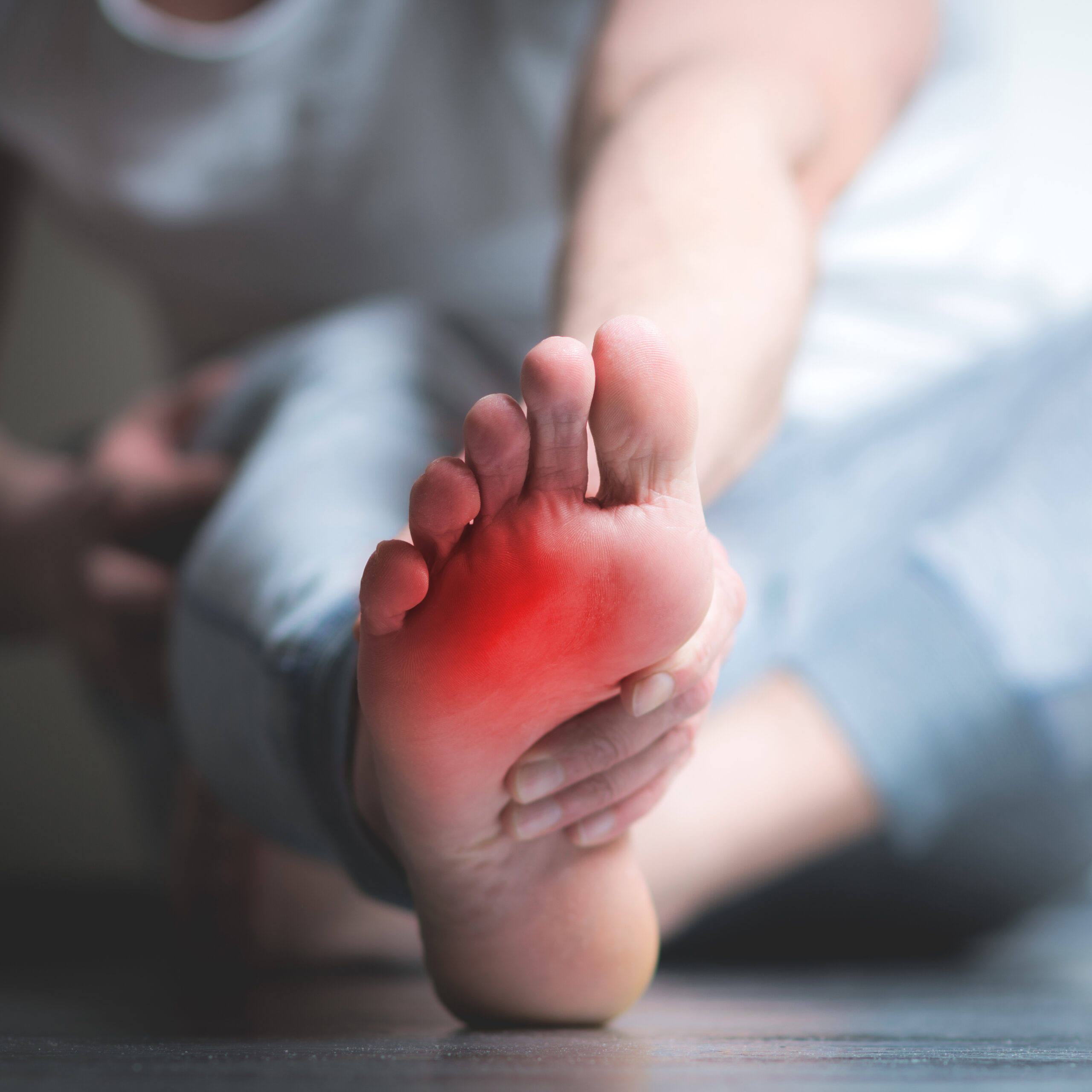
Metatarsalgia
Metatarsalgia (met-uh-tahr-SAL-juh) is a condition in which the ball of your foot becomes painful and inflamed. You might develop it if you participate in activities that involve running and jumping. There are other causes as well, including foot deformities and shoes that are too tight or too loose.
Although generally not serious, Metatarsalgia can sideline you. Fortunately, at-home treatments, such as ice and rest, often relieve symptoms. Wearing proper footwear with shock-absorbing insoles or arch supports might prevent or minimize future problems withMetatarsalgia.

Morton’s Neuroma
Morton’s Neuroma is a painful condition that affects the ball of your foot, most commonly the area between your third and fourth toes.Morton’s Neuroma may feel as if you are standing on a pebble in your shoe or on a fold in your sock.
Morton’s Neuroma involves a thickening of the tissue around one of the nerves leading to your toes. This can cause a sharp, burning pain in the ball of your foot. Your toes also may sting, burn or feel numb.
Many people experience relief by switching to lower heeled shoes with wider toe boxes. The best results come from elevating the metatarsal arch using a custom made orthotic, if this fails then your GP can arrange for a corticosteroid injections or surgery may be necessary.
Pain in the Bones due to Structural Change:

Hallux Rigidus
The most common site of arthritis in the foot is at the base of the big toe. This joint is called the metatarsophalangeal, or MTP joint. It’s important because it has to bend every time you take a step. If the joint starts to stiffen, walking can become painful and difficult.
If wear-and-tear or injury damage the cartilage in the MTP joint, the raw bone ends can rub together creating a spur. This overgrowth can prevent the toe from bending as much as it needs to when you walk. The result is a stiff big toe, orHallux Rigidus.
Hallux Rigidus usually develops in adults between the ages of 30 and 60 years. No one knows why it appears in some people and not others. It may result from an injury to the toe or from differences in individuals gait that increase stress on the joint.
Pain relievers and anti-inflammatory medications such as ibuprofen may help reduce the swelling and ease the pain. Applying ice packs or taking contrast (hot + cold) foot baths may also help reduce inflammation and control symptoms for a short period of time. But this will not be enough to stop the condition from progressing. Wearing a shoe with a large toe box will reduce the pressure on the toe, but the best way is to elevate the metatarsal bone, therefore reducing the movement in the MTP joint by using a custom made orthotic.

Hammer Toe
A Hammer Toe is a deformity that causes your toe to bend or curl downward instead of pointing forward.
Although a Hammer Toe may be present at birth, it usually develops over time due to common causes such as; a traumatic toe injury; arthritis; an unusually high foot arch; wearing shoes that don’t fit properly; tightened ligaments or tendons in the foot or pressure from a bunion and lastly spinal cord or peripheral nerve damage may also cause all of your toes to curl downward

fallen arches
When you have flatfeet your arches on the inside of your feet are flattened, allowing the entire soles of your feet to touch the floor when you stand up. A fairly common and usually painless condition, flatfeet can occur when the arches don’t develop during childhood. In other cases, flatfeet develop after an injury or from the simple wear-and-tear stresses of age.
Flatfeet can sometimes contribute to problems in your ankles, knees and hips because the condition can alter the alignment of your legs (i.e. effecting your gait). If you aren’t suffering pain, no treatment is usually necessary, but if you are, this can be simply corrected by custom made orthotics supplied by your podiatrist.

Bunions – Hallux Valgus
Surgery should only be considered as a last resort and only when a bunion is painful every day, and you can no longer find comfortable shoes. But before surgery, exhaust all conservative approaches as surgery can be complicated, painful and is not a quick fix. (Less common is the little toe version which is called a bunionette.)
You should start with trying to find wider fitting shoes with deep areas for toes to avoid rubbing and putting pressure on the bunion.
Then you should like at custom made shoe inserts: They will help avoid abnormal foot motion, but they should also support the metatarsal arch, preventing the twisting of the Metatarsal bone to the big toe. This stops the progression of the big toe towards the small toes, leading to the Bunion increasing in size.
BIOMECHANICS
Gait Correction using Orthotics
Consultation and Assessment
£55
BIOMECHANICS
Gait Correction using Orthotics
Additional charges – Standard Orthotics
£25 – £70
BIOMECHANICS
Gait Correction using Orthotics
Includes 3D scan, and custom made printed Orthotics (pair).
£325


